The Behaviour of the Horse and the Effect of Nutrition and the Microbiome
Nutrition and a well-balanced ration are not only important for meeting a horse’s nutritional requirements, but are also essential for its health and overall wellbeing. A horse’s diet can also influence its behaviour. For example, nutritional deficiencies can lead to stress, different nutrients can affect behaviour in different ways, and there is a link between the microbiome and the horse’s behaviour and reactivity. In this blog, we therefore discuss how nutrition can influence a horse’s behaviour and which types of feed can help support behaviour in horses.
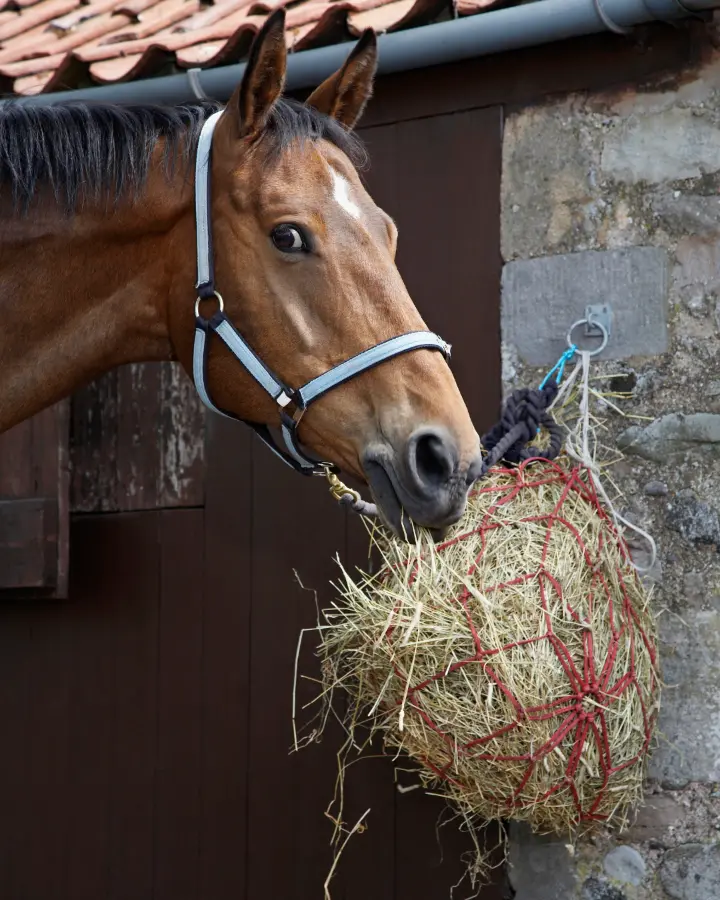
Nutrition and a well-balanced ration are not only important for meeting a horse’s nutritional requirements, but are also essential for its health and overall wellbeing. A horse’s diet can also influence its behaviour. For example, nutritional deficiencies can lead to stress, different nutrients can affect behaviour in different ways, and there is a link between the microbiome and the horse’s behaviour and reactivity. In this blog, we therefore discuss how nutrition can influence a horse’s behaviour and which types of feed can help support behaviour in horses.
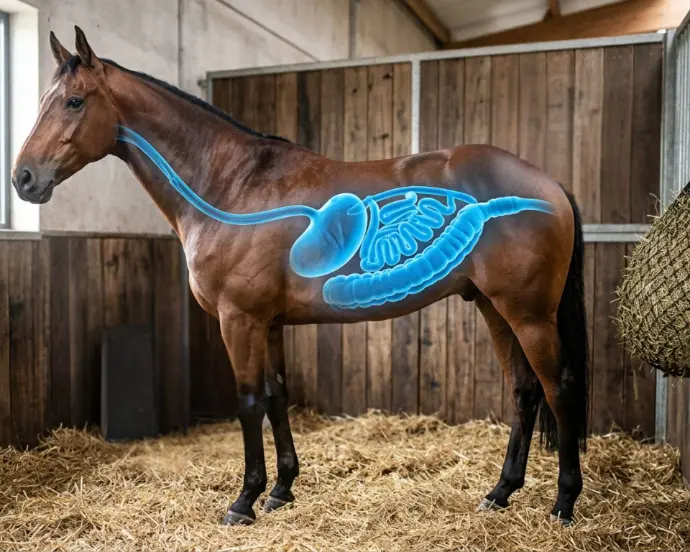
The Role of the Microbiome and the Effect on Behaviour and Stress
The gut flora, or microbiome, in the horse’s intestines consists of various micro-organisms such as bacteria and fungi. The correct balance of the microbiome is, among other things, essential for the functioning of the intestines 1. In addition, a link has been established between the balance of the microbiome and the behaviour of the horse 2. In humans it has previously been found that there is a link between the brain and the microbiome in the intestines. This link appears to work in both directions. When there is an imbalance in the microbiome this can influence a person’s mental state, but conversely it is also possible that the mental state influences the balance of the microbiome 3. Research has shown that the microbiome of the horse also influences the behaviour of the horse 4. When the microbiome becomes unbalanced this can have a negative influence on behaviour and lead to increased reactivity during stressful situations. Research carried out by Mach et al. (2020) showed that behaviours such as stereotypic behaviour, which indicates stress, have a clear effect on the microbiome and that different types of micro-organisms within the gut flora also influence the behaviour of the horse. The composition of the microbiome therefore clearly affects the behaviour of the horse and vice versa.
The Effect of Nutrition on the Microbiome and on Behaviour
The diet of the horse has a major influence on the balance and composition of the microbiome in the horse’s intestines. The horse’s digestive system is naturally adapted to a diet that is rich in fibre and contains a large amount of forage. The fermentation of fibre from forage contributes to a balanced microbiome 5. Through fermentation, fibres are converted into volatile fatty acids, which supply approximately 60 to 70% of the horse’s daily energy requirement 5.
In addition, other carbohydrates, such as starch and sugar, also form an important source of energy. However, when an excess of starch and sugar is fed, this can pass into the intestines and ultimately lead to an imbalance of the microbiome 6.
Changes to the diet or diets that do not match the requirements of the horse can have an effect on the behaviour of the horse 7. A study by Destrez et al. (2019), for example, showed that changing to a diet rich in starch and sugar led to changes in the microbiome and had a significant effect on the behaviour of horses. In stressful situations these horses showed an increased stress response. Research by Bulmer et al. (2019) also showed that feeding a starch-rich ration caused test horses to become more reactive during behavioural tests and that the microbiome developed towards dysbiosis. In comparison, another group of horses received a fibre-rich diet. These horses showed calmer behaviour during the tests and the microbiome remained more stable. This shows the influence nutrition has on the microbiome, the behaviour of the horse and the connection between the microbiome and the horse’s brain 8.
Forage therefore forms the basis of every diet. A commonly used rule of thumb is that a horse should receive at least 1.5% of its body weight in kg of dry matter daily 9. There are also studies that have shown that there is a clear relationship between a shortage of forage and negative changes in the behaviour of the horse 9. To meet the full nutritional requirements of the horse, the diet is often supplemented with concentrate feed. In doing so, it is important to take the individual energy requirements of the horse into account in order to prevent an excess of sugar and starch. When concentrate feed contains too much sugar and starch compared to the requirements of the horse, a balancer or a vitamin and mineral supplement can be chosen instead. In this way the daily requirement for vitamins and minerals can still be met without feeding excessive amounts of sugars and starch.
The Role of Supplements and Supporting Behaviour and Stress
As described above, feeding an appropriate diet is essential for the microbiome, behaviour and reactions during stressful situations. However, supplements can sometimes provide additional support in order to promote calm behaviour and support the balance of the microbiome.
To support the microbiome, pre-, pro- and postbiotics can be used 10. Ganda et al. (2023), for example, showed that feeding postbiotics, a product derived from the fermentation of probiotics, resulted in a more stable and robust gut microbiome in research horses after experiencing stress during stressful situations.
In addition, magnesium plays an important role in muscle relaxation. When a horse experiences stress, the body may have an increased need for magnesium 11. Factors such as excessive sweating, for example during warm summer months, can also contribute to a magnesium deficiency. A deficiency can cause muscles to relax less effectively and remain tense. This increased muscle tension can manifest itself in nervousness and stress in the horse. Supplementing magnesium can therefore support horses that are sensitive to stress and help promote calm behaviour 12. Synovium Mgnium contains two different forms of magnesium, which contributes to optimal absorption and efficient functioning.
All in all, an appropriate ration is important for the balance of the microbiome, which also affects the behaviour of the horse.
References
1. Julliand, V., Grimm, P. (2016) HORSE SPECIES SYMPOSIUM: The Microbiome of the Horse Hindgut: History and Current Knowledge. Journal of Animal Science, 94 (6): 2262–2274.
2. Mach, N., Lansade, L., Bars-Cortina, D., Dhorne-Pollet, S., Foury, A., Moisan, M. P., Ruet, A. (2021) Gut Microbiota Resilience in Horse Athletes Following Holidays out to Pasture. Scientific Reports, 11 (5007): 1–16.
3. Allen, A. P., Dinan, T. G., Clarke, G,; Cryan, J. F. (2017) A Psychology of the Human Brain–Gut–Microbiomeaxis. Social & Personality Psychology Compass, 11 (4), 1–22.
4. Mach, N., Ruet, A., Clark, A., Bars-Cortina, D., Ramayo-Caldas, Y., Crisci, E., Pennarun, S., Dhorne-Pollet, S., Foury, A., Moisan, M. P., Lansade, L. (2020) Priming for Welfare: Gut Microbiota Is Associated with Equitation Conditions and Behavior in Horse Athletes. Scientific Reports, 10 (8311), 1–19.
5. Wunderlich, G., Bull, M., Ross, T., Rose, M., Chapman, B.(2023) Understanding the Microbial Fibre Degrading Communities & Processes in the Equine Gut. Animal Microbiome, 5 (3): 1–17.
6. Al Jassim, R. A. M., Scott, P. T., Trebbin, A. L., Trott, D., Pollitt, C. C. (2005) The Genetic Diversity of Lactic Acid Producing Bacteria in the Equine Gastrointestinal Tract. FEMS Microbiology Letters, 248 (1): 75–81.
7. Destrez, A., Grimm, P., Julliand, V. (2019) Dietary-Induced Modulation of the Hindgut Microbiota Is Related to Behavioral Responses during Stressful Events in Horses. Physiology & Behavior, 202: 94–100.
8. Bulmer, L. S., Murray, J. A., Burns, N. M., Garber, A., Wemelsfelder, F., McEwan, N. R., Hastie, P. M. (2019) High-Starch Diets Alter Equine Faecal Microbiota and Increase Behavioural Reactivity. Scientific Reports, 9 (18621): 1–11.
9. Ermers, C., McGilchrist, N., Fenner, K., Wilson, B., McGreevy, P. (2023) The Fibre Requirements of Horses and the Consequences and Causes of Failure to Meet Them. Animals, 13(8): 1–16.
10. Ganda, E., Chakrabarti, A., Sardi, M. I., Tench, M., Kozlowicz, B. K., Norton, S. A., Warren, L. K., Khafipour, E. (2023) Saccharomyces Cerevisiae Fermentation Product Improves Robustness of Equine Gut Microbiome upon Stress. Frontiers Veterinary Science,10: 1–12.
11. Pickering, G.; Mazur, A., Trousselard, M., Bienkowski, P., Yaltsewa, N., Amessou, M., Noah, L., Pouteau, E. (2020) Magnesium Status and Stress: The Vicious Circle Concept Revisited. Nutrients, 12 (12): 1–21.
12. Dodd, J. A., Doran, G., Harris, P., Noble, G. K. (2015) Magnesium Aspartate Supplementation and Reaction Speed Response in Horses. Journal of Equine Veterinary Science, 35(5): 401–402.
The Role of the Microbiome and the Effect on Behaviour and Stress
The gut flora, or microbiome, in the horse’s intestines consists of various micro-organisms such as bacteria and fungi. The correct balance of the microbiome is, among other things, essential for the functioning of the intestines 1. In addition, a link has been established between the balance of the microbiome and the behaviour of the horse 2. In humans it has previously been found that there is a link between the brain and the microbiome in the intestines. This link appears to work in both directions. When there is an imbalance in the microbiome this can influence a person’s mental state, but conversely it is also possible that the mental state influences the balance of the microbiome 3. Research has shown that the microbiome of the horse also influences the behaviour of the horse 4. When the microbiome becomes unbalanced this can have a negative influence on behaviour and lead to increased reactivity during stressful situations. Research carried out by Mach et al. (2020) showed that behaviours such as stereotypic behaviour, which indicates stress, have a clear effect on the microbiome and that different types of micro-organisms within the gut flora also influence the behaviour of the horse. The composition of the microbiome therefore clearly affects the behaviour of the horse and vice versa.
The Effect of Nutrition on the Microbiome and on Behaviour
The diet of the horse has a major influence on the balance and composition of the microbiome in the horse’s intestines. The horse’s digestive system is naturally adapted to a diet that is rich in fibre and contains a large amount of forage. The fermentation of fibre from forage contributes to a balanced microbiome 5. Through fermentation, fibres are converted into volatile fatty acids, which supply approximately 60 to 70% of the horse’s daily energy requirement 5.
In addition, other carbohydrates, such as starch and sugar, also form an important source of energy. However, when an excess of starch and sugar is fed, this can pass into the intestines and ultimately lead to an imbalance of the microbiome 6.
Changes to the diet or diets that do not match the requirements of the horse can have an effect on the behaviour of the horse 7. A study by Destrez et al. (2019), for example, showed that changing to a diet rich in starch and sugar led to changes in the microbiome and had a significant effect on the behaviour of horses. In stressful situations these horses showed an increased stress response. Research by Bulmer et al. (2019) also showed that feeding a starch-rich ration caused test horses to become more reactive during behavioural tests and that the microbiome developed towards dysbiosis. In comparison, another group of horses received a fibre-rich diet. These horses showed calmer behaviour during the tests and the microbiome remained more stable. This shows the influence nutrition has on the microbiome, the behaviour of the horse and the connection between the microbiome and the horse’s brain 8.
Forage therefore forms the basis of every diet. A commonly used rule of thumb is that a horse should receive at least 1.5% of its body weight in kg of dry matter daily 9. There are also studies that have shown that there is a clear relationship between a shortage of forage and negative changes in the behaviour of the horse 9. To meet the full nutritional requirements of the horse, the diet is often supplemented with concentrate feed. In doing so, it is important to take the individual energy requirements of the horse into account in order to prevent an excess of sugar and starch. When concentrate feed contains too much sugar and starch compared to the requirements of the horse, a balancer or a vitamin and mineral supplement can be chosen instead. In this way the daily requirement for vitamins and minerals can still be met without feeding excessive amounts of sugars and starch.
The Role of Supplements and Supporting Behaviour and Stress
As described above, feeding an appropriate diet is essential for the microbiome, behaviour and reactions during stressful situations. However, supplements can sometimes provide additional support in order to promote calm behaviour and support the balance of the microbiome.
To support the microbiome, pre-, pro- and postbiotics can be used 10. Ganda et al. (2023), for example, showed that feeding postbiotics, a product derived from the fermentation of probiotics, resulted in a more stable and robust gut microbiome in research horses after experiencing stress during stressful situations.
In addition, magnesium plays an important role in muscle relaxation. When a horse experiences stress, the body may have an increased need for magnesium 11. Factors such as excessive sweating, for example during warm summer months, can also contribute to a magnesium deficiency. A deficiency can cause muscles to relax less effectively and remain tense. This increased muscle tension can manifest itself in nervousness and stress in the horse. Supplementing magnesium can therefore support horses that are sensitive to stress and help promote calm behaviour 12. Synovium Mgnium contains two different forms of magnesium, which contributes to optimal absorption and efficient functioning.
All in all, an appropriate ration is important for the balance of the microbiome, which also affects the behaviour of the horse.
References
1. Julliand, V., Grimm, P. (2016) HORSE SPECIES SYMPOSIUM: The Microbiome of the Horse Hindgut: History and Current Knowledge. Journal of Animal Science, 94 (6): 2262–2274.
2. Mach, N., Lansade, L., Bars-Cortina, D., Dhorne-Pollet, S., Foury, A., Moisan, M. P., Ruet, A. (2021) Gut Microbiota Resilience in Horse Athletes Following Holidays out to Pasture. Scientific Reports, 11 (5007): 1–16.
3. Allen, A. P., Dinan, T. G., Clarke, G,; Cryan, J. F. (2017) A Psychology of the Human Brain–Gut–Microbiomeaxis. Social & Personality Psychology Compass, 11 (4), 1–22.
4. Mach, N., Ruet, A., Clark, A., Bars-Cortina, D., Ramayo-Caldas, Y., Crisci, E., Pennarun, S., Dhorne-Pollet, S., Foury, A., Moisan, M. P., Lansade, L. (2020) Priming for Welfare: Gut Microbiota Is Associated with Equitation Conditions and Behavior in Horse Athletes. Scientific Reports, 10 (8311), 1–19.
5. Wunderlich, G., Bull, M., Ross, T., Rose, M., Chapman, B.(2023) Understanding the Microbial Fibre Degrading Communities & Processes in the Equine Gut. Animal Microbiome, 5 (3): 1–17.
6. Al Jassim, R. A. M., Scott, P. T., Trebbin, A. L., Trott, D., Pollitt, C. C. (2005) The Genetic Diversity of Lactic Acid Producing Bacteria in the Equine Gastrointestinal Tract. FEMS Microbiology Letters, 248 (1): 75–81.
7. Destrez, A., Grimm, P., Julliand, V. (2019) Dietary-Induced Modulation of the Hindgut Microbiota Is Related to Behavioral Responses during Stressful Events in Horses. Physiology & Behavior, 202: 94–100.
8. Bulmer, L. S., Murray, J. A., Burns, N. M., Garber, A., Wemelsfelder, F., McEwan, N. R., Hastie, P. M. (2019) High-Starch Diets Alter Equine Faecal Microbiota and Increase Behavioural Reactivity. Scientific Reports, 9 (18621): 1–11.
9. Ermers, C., McGilchrist, N., Fenner, K., Wilson, B., McGreevy, P. (2023) The Fibre Requirements of Horses and the Consequences and Causes of Failure to Meet Them. Animals, 13(8): 1–16.
10. Ganda, E., Chakrabarti, A., Sardi, M. I., Tench, M., Kozlowicz, B. K., Norton, S. A., Warren, L. K., Khafipour, E. (2023) Saccharomyces Cerevisiae Fermentation Product Improves Robustness of Equine Gut Microbiome upon Stress. Frontiers Veterinary Science,10: 1–12.
11. Pickering, G.; Mazur, A., Trousselard, M., Bienkowski, P., Yaltsewa, N., Amessou, M., Noah, L., Pouteau, E. (2020) Magnesium Status and Stress: The Vicious Circle Concept Revisited. Nutrients, 12 (12): 1–21.
12. Dodd, J. A., Doran, G., Harris, P., Noble, G. K. (2015) Magnesium Aspartate Supplementation and Reaction Speed Response in Horses. Journal of Equine Veterinary Science, 35(5): 401–402.