The Importance of Chewing and Its Effect on the Health of the Horse’s Digestive System
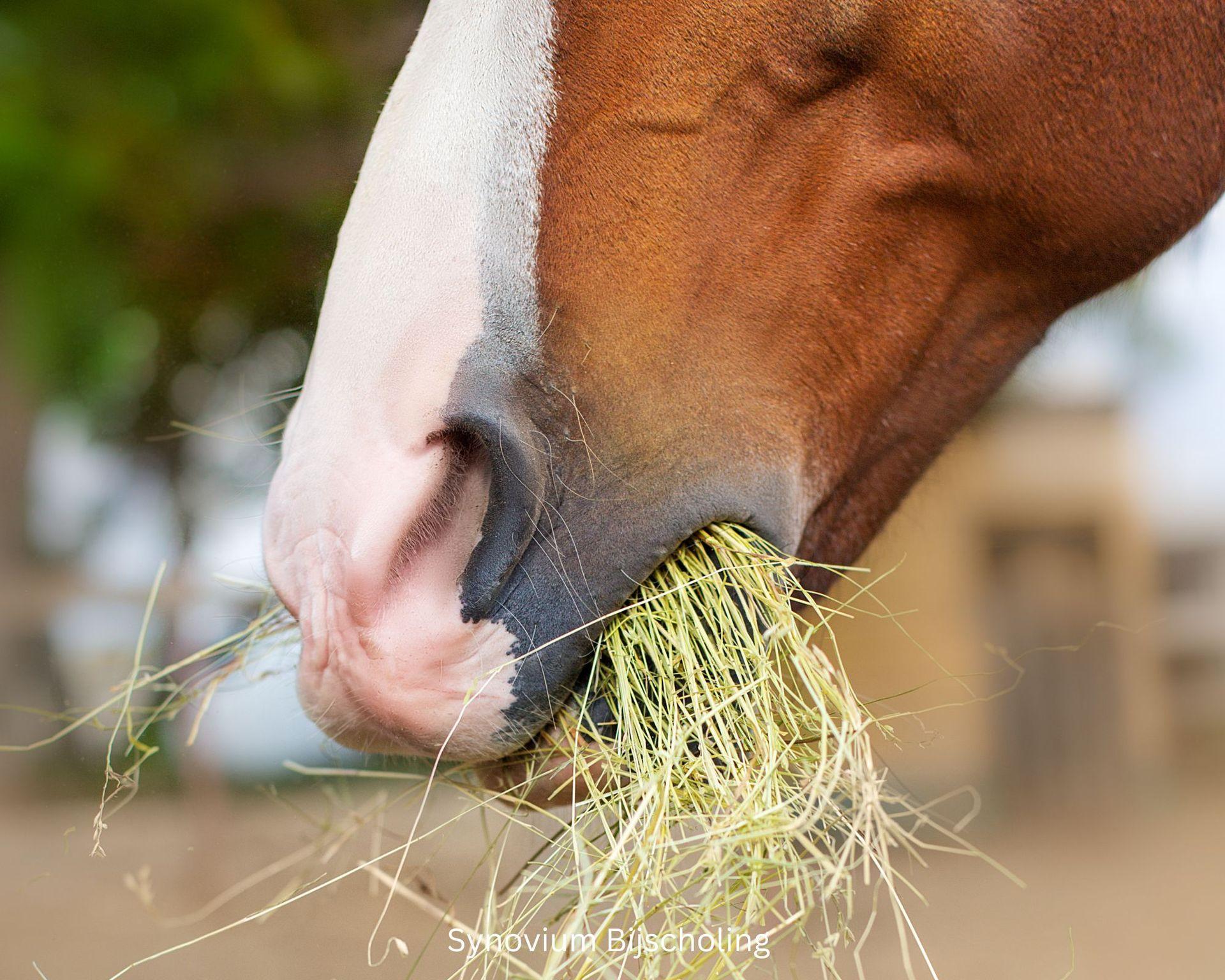
In the wild, horses graze for approximately 14 to 16 hours a day. This means that horses spend the majority of the day eating. The digestive system is therefore adapted to process small amounts of feed continuously throughout the day. An important part of feed digestion involves the teeth and the chewing movements the horse makes. Chewing reduces the size of the feed, stimulates saliva production, and supports both dental health and the horse’s digestive system.
The Horse’s Teeth
The digestion of feed begins in the horse’s mouth, where a healthy set of teeth is a crucial component of proper digestion. The horse’s teeth break down the feed into smaller particles, allowing it to pass easily through the oesophagus to the stomach. The horse’s dentition consists of premolars, molars and incisors¹. In addition, geldings and stallions may have canine teeth, and some horses also have wolf teeth¹. However, it is mainly the incisors, premolars and molars that play a key role in feed digestion. The incisors grasp and cut the feed, for example during grazing when grass blades are cut by the incisors. The premolars and molars then grind the feed finely.
Why Are Chewing Movements So Important?
Because horses eat for the majority of the day, their teeth are adapted accordingly. A horse’s teeth continue to grow throughout their life, but wear down evenly through chewing. The constant chewing movements made while eating are therefore important, among other things, for maintaining healthy teeth².
In addition, chewing is essential for the health of the digestive system. When a horse chews, saliva is produced³. Saliva contains sodium bicarbonate, which has a buffering effect and neutralises stomach acid. This means it reduces the acidity of the gastric acid. The horse’s stomach produces acid continuously, even when there is no feed present. The horse’s stomach consists of two sections, of which the upper part is not protected against acidic gastric juices. If the stomach acid is insufficiently buffered, it can damage this upper section and lead to the development of gastric ulcers⁴. For good gastric health, it is therefore important that the horse can eat small amounts of feed throughout the day, allowing it to chew regularly, buffer stomach acid and reduce the risk of gastric ulcers.
Chewing Forage vs Concentrates
The number of chewing movements a horse makes differs between types of feed. Horses chew longer and more frequently on one kilogram of forage compared to one kilogram of concentrates. When chewing one kilogram of forage, a horse makes approximately 3,000 to 3,500 chewing movements, whereas chewing one kilogram of concentrates results in between 800 and 1,200 chewing movements⁵. Because horses chew forage more often and for longer, this leads to increased saliva production, which has a buffering effect on the stomach. In addition, forage absorbs excess stomach acid and helps remove it from the stomach.
The difference in the number of chewing movements between forage and concentrates is mainly due to the structure of the feed and the difference in fibre content. Forage, such as hay, contains more fibre, requiring horses to make more chewing movements to reduce the feed sufficiently so that it can pass through the oesophagus to the stomach⁶. Providing sufficient forage throughout the day is therefore essential for the horse.
In addition to having a positive effect on gastric health, the difference in chewing movements between forage and concentrates also affects dental health. As mentioned earlier, chewing movements ensure even wear of the teeth. Horses that are fed a diet with a relatively high proportion of concentrates compared to forage may develop dental problems more quickly, related to reduced and uneven tooth wear. Such problems occur less frequently in horses that are fed sufficient forage on a daily basis⁷.
A balanced ration is therefore not only important for providing adequate nutrients, but also for ensuring a healthy and properly functioning digestive system. If you are unsure whether your horse’s ration meets its needs, seek advice from a nutritionist.
References
1. Dixon, P.M., Dacre, I. (2005) A review of equine dental disorders. The Veterinary Journal, 169(2):165-187.
2. Witherow, B. (2025) The significance of chewing in horses. Equine, 9(1):6-12.
3. Buchanan, B.R., Andrews, F.M. (2003) Treatment and prevention of equine gastric ulcer syndrome. Veterinary Clinics of North America: Equine Practice, 19(3):575-597.
4. Bell, R., Mogg, T., Kingston, J. (2007) Equine gastric ulcer syndrome in adult horses: A review. New Zealand Veterinary Journal, 55(1):1-12.
5. Meyer, H., Ahlswede, L., Reinhard, H. (1975) Untersuchungen über Freßdauer, Kaufrequenz und Futterzerkleinerung beim Pferd. Deutsche Tierarztliche Wochenschrift, 82(2):54-58.
6. Janis, C.M., Constable, E.C., Houpt, K.A., Streich, W.J., Clauss, M. (2010) Comparative ingestive mastication in domestic horses and cattle: a pilot investigation. Journal of Animal Physiology and Animal Nutrition, 94(6):402-409.
7. Bonin, S.J., Clayton, H.M., Lanovaz, J.L., Johnston, T. (2007) Comparison of mandibular motion in horses chewing hay and pellets. Equine Veterinary Journal, 39(3):258-262.
In the wild, horses graze for approximately 14 to 16 hours a day. This means that horses spend the majority of the day eating. The digestive system is therefore adapted to process small amounts of feed continuously throughout the day. An important part of feed digestion involves the teeth and the chewing movements the horse makes. Chewing reduces the size of the feed, stimulates saliva production, and supports both dental health and the horse’s digestive system.
The Horse’s Teeth
The digestion of feed begins in the horse’s mouth, where a healthy set of teeth is a crucial component of proper digestion. The horse’s teeth break down the feed into smaller particles, allowing it to pass easily through the oesophagus to the stomach. The horse’s dentition consists of premolars, molars and incisors¹. In addition, geldings and stallions may have canine teeth, and some horses also have wolf teeth¹. However, it is mainly the incisors, premolars and molars that play a key role in feed digestion. The incisors grasp and cut the feed, for example during grazing when grass blades are cut by the incisors. The premolars and molars then grind the feed finely.
Why Are Chewing Movements So Important?
Because horses eat for the majority of the day, their teeth are adapted accordingly. A horse’s teeth continue to grow throughout their life, but wear down evenly through chewing. The constant chewing movements made while eating are therefore important, among other things, for maintaining healthy teeth².
In addition, chewing is essential for the health of the digestive system. When a horse chews, saliva is produced³. Saliva contains sodium bicarbonate, which has a buffering effect and neutralises stomach acid. This means it reduces the acidity of the gastric acid. The horse’s stomach produces acid continuously, even when there is no feed present. The horse’s stomach consists of two sections, of which the upper part is not protected against acidic gastric juices. If the stomach acid is insufficiently buffered, it can damage this upper section and lead to the development of gastric ulcers⁴. For good gastric health, it is therefore important that the horse can eat small amounts of feed throughout the day, allowing it to chew regularly, buffer stomach acid and reduce the risk of gastric ulcers.
Chewing Forage vs Concentrates
The number of chewing movements a horse makes differs between types of feed. Horses chew longer and more frequently on one kilogram of forage compared to one kilogram of concentrates. When chewing one kilogram of forage, a horse makes approximately 3,000 to 3,500 chewing movements, whereas chewing one kilogram of concentrates results in between 800 and 1,200 chewing movements⁵. Because horses chew forage more often and for longer, this leads to increased saliva production, which has a buffering effect on the stomach. In addition, forage absorbs excess stomach acid and helps remove it from the stomach.
The difference in the number of chewing movements between forage and concentrates is mainly due to the structure of the feed and the difference in fibre content. Forage, such as hay, contains more fibre, requiring horses to make more chewing movements to reduce the feed sufficiently so that it can pass through the oesophagus to the stomach⁶. Providing sufficient forage throughout the day is therefore essential for the horse.
In addition to having a positive effect on gastric health, the difference in chewing movements between forage and concentrates also affects dental health. As mentioned earlier, chewing movements ensure even wear of the teeth. Horses that are fed a diet with a relatively high proportion of concentrates compared to forage may develop dental problems more quickly, related to reduced and uneven tooth wear. Such problems occur less frequently in horses that are fed sufficient forage on a daily basis⁷.
A balanced ration is therefore not only important for providing adequate nutrients, but also for ensuring a healthy and properly functioning digestive system. If you are unsure whether your horse’s ration meets its needs, seek advice from a nutritionist.
References
1. Dixon, P.M., Dacre, I. (2005) A review of equine dental disorders. The Veterinary Journal, 169(2):165-187.
2. Witherow, B. (2025) The significance of chewing in horses. Equine, 9(1):6-12.
3. Buchanan, B.R., Andrews, F.M. (2003) Treatment and prevention of equine gastric ulcer syndrome. Veterinary Clinics of North America: Equine Practice, 19(3):575-597.
4. Bell, R., Mogg, T., Kingston, J. (2007) Equine gastric ulcer syndrome in adult horses: A review. New Zealand Veterinary Journal, 55(1):1-12.
5. Meyer, H., Ahlswede, L., Reinhard, H. (1975) Untersuchungen über Freßdauer, Kaufrequenz und Futterzerkleinerung beim Pferd. Deutsche Tierarztliche Wochenschrift, 82(2):54-58.
6. Janis, C.M., Constable, E.C., Houpt, K.A., Streich, W.J., Clauss, M. (2010) Comparative ingestive mastication in domestic horses and cattle: a pilot investigation. Journal of Animal Physiology and Animal Nutrition, 94(6):402-409.
7. Bonin, S.J., Clayton, H.M., Lanovaz, J.L., Johnston, T. (2007) Comparison of mandibular motion in horses chewing hay and pellets. Equine Veterinary Journal, 39(3):258-262.