
Seasonal changes influence coat growth, causing horses to change their coat twice each year. Before winter, as the days become shorter, horses develop a winter coat to provide insulation against the cold. As winter comes to an end and daylight hours increase, the winter coat is shed and replaced by a summer coat. Coat change is therefore a seasonal process regulated primarily by day length and daylight exposure. A healthy coat is essential for maintaining body temperature and protecting the skin. The quality of the coat and the duration of the shedding period depend on the horse's overall condition and health but may also be influenced by nutrition.
Seasonal changes affect the coat growth cycle, allowing the horse to adapt to its environment 1. The hair growth cycle consists of four phases: the anagen, catagen, telogen and exogen phases. The anagen phase is the active growth phase and represents the most metabolically active stage of the hair growth cycle 2. During the catagen phase, hair growth ceases, allowing old hairs to detach and make way for new hair growth 2. This is followed by the exogen phase, during which the hairs are shed 1. After the exogen phase, the hair follicle enters the telogen, or resting, phase 2. During this period, neither hair growth nor hair shedding occurs; instead, the hair follicles prepare for the next cycle of hair growth and the subsequent anagen phase 2.
Daylight, and particularly changes in day length, is detected by the horse's eyes 3. This enables the body to monitor seasonal changes 3. The information is converted into electrical signals that are transmitted to the suprachiasmatic nucleus (SCN) within the hypothalamus 4. The SCN functions as the body's biological clock and regulates circadian rhythms. It also influences the production of melatonin by the pineal gland 5. Melatonin suppresses the secretion of prolactin, a hormone with multiple physiological functions, including the regulation of the hair follicle cycle 6.
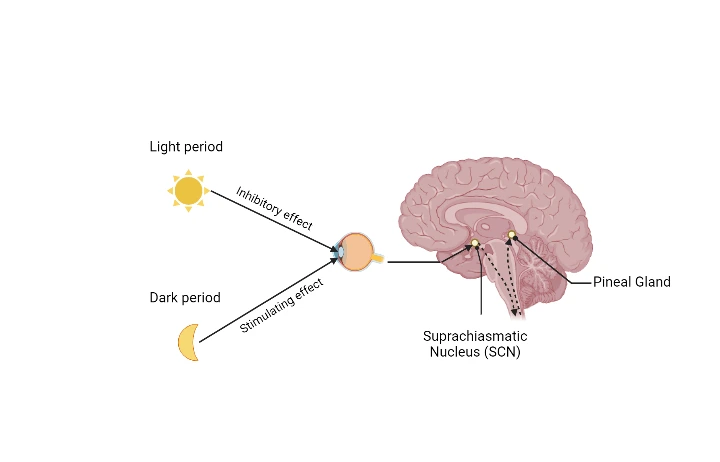
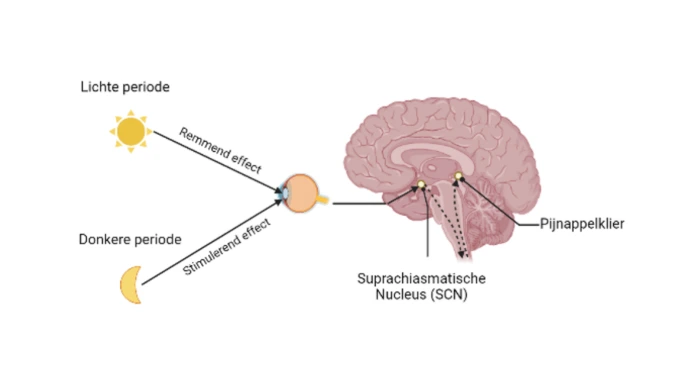
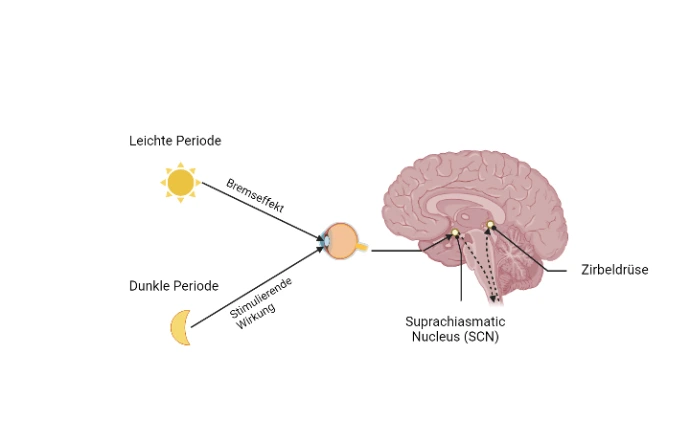
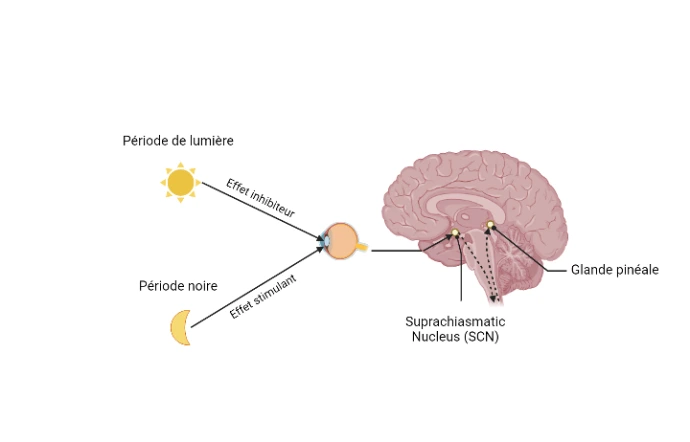
As day length decreases and daylight hours become shorter, increased melatonin production and reduced prolactin secretion stimulate the development of the winter coat 7. Conversely, as daylight hours increase during the transition to spring, melatonin production decreases while prolactin secretion increases, thereby stimulating the shedding process 7. In addition to photoperiod, environmental temperature also influences coat growth and thickness. Studies have demonstrated that horses kept in cooler environments develop a thicker winter coat, while lower temperatures delay the onset of seasonal shedding 8.
The development of a winter coat and the shedding process both require energy. Furthermore, the hair growth cycle depends on an adequate supply of protein, vitamins and minerals 9. It is therefore important that the horse's diet meets its nutritional requirements and that the horse is maintained in optimal body condition. Older horses, undernourished horses, horses receiving nutritionally inadequate diets, or horses with underlying health conditions are more likely to develop a dull coat or experience delayed or incomplete shedding 10–13. Consequently, monitoring coat quality provides valuable information regarding the horse's overall health and welfare 11.
Nutritional supplements may support the shedding process and the development of a healthy coat, provided that any underlying health conditions are first identified and appropriately managed. Studies have shown that supplementation with linseed oil has beneficial effects on both skin and coat condition in horses 14. In addition, the fatty acids present in linseed oil provide a sustained source of energy, helping to meet the increased energy demands associated with coat growth and seasonal shedding 15. Linseed oil is also commonly included in equine diets to promote a healthy, glossy coat 15.
Research has demonstrated that the concentrations of vitamins and minerals within the hair coat vary between seasons 16. As previously discussed, nutrition and nutrient intake directly influence hair quality 9. Therefore, supplementation with vitamins and minerals may help support coat growth and the shedding process 9,16.
Liver-support supplements may also provide benefits during the shedding period by promoting optimal liver function. The liver plays a central role in protein synthesis 17. In addition, it is responsible for the absorption, metabolism and storage of fat-soluble vitamins and certain minerals that are essential for maintaining coat quality 17. Consequently, liver disease may adversely affect both coat quality and the shedding process 18.
The Synovium supplement range includes products designed to support coat quality, coat growth and the seasonal shedding process, including Synovium Linseed Oil, Synovium Hippochol and Synovium Prefit.
References
- Plikus,
M. v., & Chuong, C. M. (2008). Complex hair cycle domain patterns and
regenerative hair waves in living rodents. Journal of Investigative
Dermatology, 128(5): 1071-1080.
- Lin, X., Zhu, L., & He, J. (2022). Morphogenesis, Growth Cycle and Molecular Regulation of Hair Follicles. Frontiers in Cell and Developmental Biology, 10: 1-11.
- Murphy, B. A. (2019). Circadian and Circannual Regulation in the Horse: Internal Timing in an Elite Athlete. Journal of Equine Veterinary Science, 76: 14-24.
- Reppert, S. M., & Weaver, D. R. (2001). Molecular analysis of mammalian circadian rhythms. Annual Review of Physiology, 63: 647-676.
- Moore, R. Y. (1997). Circadian rhythms: Basic neurobiology and clinical applications. Annual Review of Medicine, 48: 253-266.
- O’Brien, C., Darcy-Dunne, M. R., & Murphy, B. A. (2020). The effects of extended photoperiod and warmth on hair growth in ponies and horses at different times of year. PLoS ONE, 15(1): 1-18.
- Geyfman, M., Plikus, M. v., Treffeisen, E., Andersen, B., & Paus, R. (2015). Resting no more: Re-defining telogen, the maintenance stage of the hair growth cycle. Biological Reviews, 90(4): 1179-1196.
- Bocian, K., Strzelec, K., Janczarek, I., Jabłecki, Z., & Kolstrung, R. (2017). Length of winter coat in horses depending on husbandry conditions. Animal Science Journal, 88(2): 339-346.
- O’Connor, K., & Goldberg, L. J. (2021). Nutrition and hair. Clinics in Dermatology, 39(5): 412-419.
- Kronfeld, D. S. (1993). Starvation and malnutrition of horses: recognition and treatment. Journal of Equine Veterinary Science, 13(5): 298-304.
- Pritchard, J. C., Lindberg, A. C., Main, D. C. J., & Whay, H. R. (2005). Assessment of the welfare of working horses, mules and donkeys, using health and behaviour parameters. Preventive Veterinary Medicine, 69(3–4): 265-283.
- Ireland, J. L., Clegg, P. D., Mcgowan, C. M., Mckane, S. A., Chandler, K. J., & Pinchbeck, G. L. (2012). Comparison of owner-reported health problems with veterinary assessment of geriatric horses in the United Kingdom. Equine Veterinary Journal, 44(1): 94-100.
- Sykes, B. W., Hewetson, M., Hepburn, R. J., Luthersson, N., & Tamzali, Y. (2015). European College of Equine Internal Medicine Consensus Statement-Equine Gastric Ulcer Syndrome in Adult Horses. Journal of Veterinary Internal Medicine, 29(5): 1288-1299.
- O’Neill, W., McKee, S., & Clarke, A. F. (2002). Flaxseed (Linum usitatissimum) supplementation associated with reduced skin test lesional area in horses with Culicoides hypersensitivity. Canadian Journal of Veterinary Research, 66(4): 272-277.
- Warren, L. K., & Vineyard, K. R. (2013). Chapter - 7 Fat and fatty acids. In: Geor, R.J., Harris, P.A., & Coenen, M., (Eds.). Equine Applied and Clinical Nutrition. Saunders Elsevier: China.
- Jachimowicz-Rogowska, K., Topczewska, J., Krupa, W., Bajcar, M., Kwiecień, M., & Winiarska-Mieczan, A. (2022). Seasonal Changes in Trace-Element Content in the Coat of Hucul Horses. Animals, 12(20): 1-17.
- Trefts, E., Gannon, M., & Wasserman, D. H. (2017). The liver. Current Biology, 27(21): 1147–1151.
- Theelen, M. J. P., Beukers, M., Grinwis, G. C. M., & Sloet van Oldruitenborgh-Oosterbaan, M. M. (2019). Chronic iron overload causing haemochromatosis and hepatopathy in 21 horses and one donkey. Equine Veterinary Journal, 51(3): 304-309.